

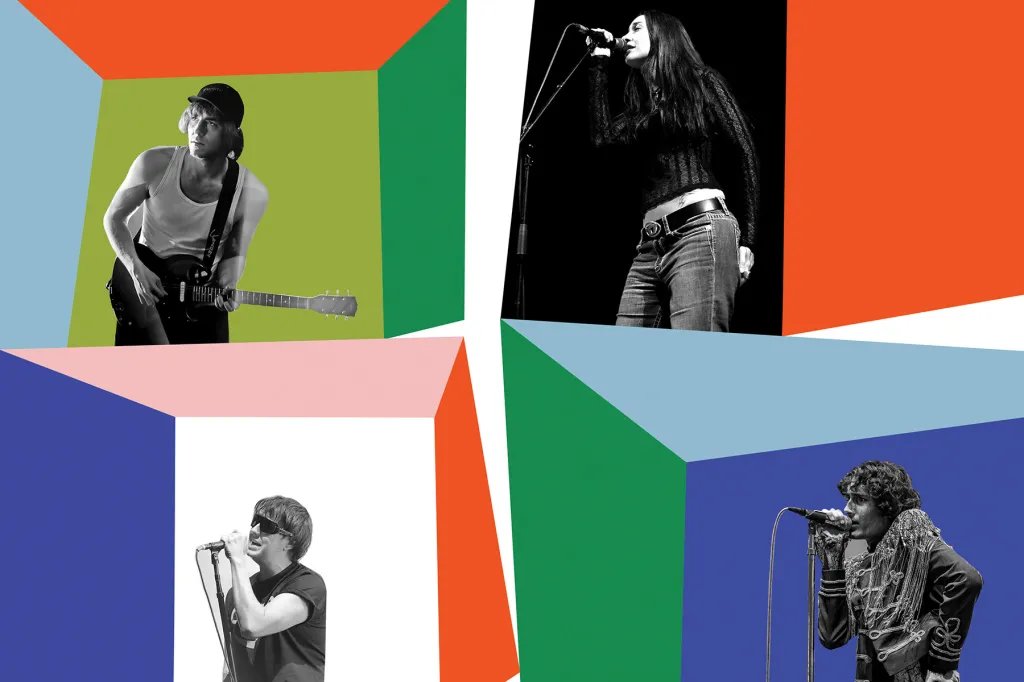

On the Billboard Hot 100 dated April 11, a handful of rock acts launched their debut entries on the chart. Israeli trio Temper City entered at No. 91 with “Self Aware,” a bluesy alt-rock lament going viral for its evocation of 2010s rock hit-makers like The Neighbourhood and Cage the Elephant. Dormant U.K. alt-rockers The Long Faces came in at No. 74 with the pop hooks and blistering six-strings of “Jane!,” a 2018 single revived through memes surrounding the anime series Jujutsu Kaisen. And most improbably, Scottish progressive pop-rock singer-songwriter Chris Rainbow — who died in 2015 — posthumously joined them at No. 94 with 1979’s “Be Like a Woman,” a long-growing trend-soundtracker on TikTok.
All three acts came from different eras, with different sounds and different paths to virality. They only had two things in common: They were all rock songs, and they were now all hits in 2026.
They weren’t the only three acts in the genre on that week’s Hot 100, either. Also hitting new peaks were U.K. rock poet Sam Fender (“Rein Me In” with Olivia Dean, No. 64), singer-songwriter Julia Wolf (“In My Room,” No. 57), self-described “y’allternative” group Dexter and The Moonrocks (“Freakin’ Out,” No. 51), alt-leaning Malcolm Todd (“Earrings,” No. 42) and even veteran indie rock outfit Tame Impala (“Dracula” with Jennie, No. 17). Meanwhile, genre-blending but rock-based artists like Dominic Fike (“Babydoll,” No. 16; “White Keys,” No. 34) and sombr (“Homewrecker,” No. 22) also staked out real estate in the top 40. And this week, Noah Kahan lands his first No. 1 on the Billboard 200 with folk-rock album The Great Divide, which also places all 21 of its songs on the Hot 100.
All in all, the wave of rock and rock-adjacent hits represents the healthiest time for the genre outside its core fans in at least a decade. By the turn of the 2020s, rock had essentially become a fringe genre in the mainstream, with only the very biggest rock artists making a chart impact and the guitar practically an endangered species on top 40 radio and in other pop spaces. But now, rock acts are becoming some of the most exciting and quickest-rising artists in music, and shifting the center of pop in the process.
At this year’s Coachella, not only did acts like sombr and Turnstile draw huge crowds at outdoor stages, but legacy acts like The Strokes and Jack White also delivered some of the buzziest sets of the weekend, as did indie standouts like Ethel Cain and Geese (whose frontman, Cameron Winter, was spotted with megastar Olivia Rodrigo between weekends). Even festival headliners Justin Bieber and Karol G made room in their sets for guest appearances by indie-approved guitarists — Mk.Gee and Greg Gonzalez (of Cigarettes After Sex), respectively.
And speaking of Rodrigo: Though the runaway success of official debut single “drivers license” minted her as one of the decade’s biggest breakout artists, she’s since revealed herself as an alt-rocker in pop star’s clothing through later chart-toppers like the Paramore-indebted “good 4 u” and The Cure-referencing “drop dead.” In the early 2020s, she’d been one of the pop-world artists to signal that things were once again safe for rock at top 40 radio — along with an alt-folk-pivoting Taylor Swift and a temporarily thrashier Billie Eilish. Now, Rodrigo serves as one of its greatest mainstream spokespeople and legacy-bearers, bringing out David Byrne at her concerts and raving about seeing Nine Inch Nails live.
Rodrigo with The Cure’s Robert Smith onstage in 2025.
Kevin Mazur/Getty Images
So why hasn’t this recent surge come without the usual deluge of “Rock Is BACK!” fan excitement, media reports and industry overreaction? This revival is harder to spot because it’s coming from all over the place. In previous decades, rock’s most recognizable moments of mainstream takeover traditionally came from a number of concurrent breakthrough acts unified by a particular sound and scene: Think the swarm of Los Angeles hair metal bands in the ’80s, or the Seattle grunge explosion in the ’90s, or the subtler New York indie rock infiltration of the 2000s.
This time, however, there’s no such easily identified core to rock’s takeover. With the primary arena for pop music shifting from local radio to shared social media spaces that conventional tastemakers no longer control, music from any era is suddenly fair game to become the week’s biggest hit. Today, it’s just as common to see a new Hot 100 entry pop up from ’90s greats like Weezer, Radiohead or Jeff Buckley — each of whom reached the chart in the past year with decade(s)-old songs that were never even officially released as singles back in their day — as it is from Sleep Token or Twenty One Pilots.
And while the chasm between pop and rock is smaller than it has been in ages, the distance between rock and hip-hop (which one is Fike?), rock and R&B (which one is Malcolm Todd?), rock and country (which one is Zach Bryan?) and rock and Americana (which one is Kahan?) are all also shrinking. Rock’s current breakthrough isn’t exciting just because it brings a previously vital genre back to the popular music mix, but because it does so without feeling like it’s really taking away from the landscape’s other core genres — just working as an essential ingredient alongside them.
Maybe that’s why this time it also feels less like a temporary fad and more like an overall recalibration of top 40 radio. The exact formula might shift in one direction or another, but — for the first time in a long time — is seeming less likely to disappear again anytime soon.
This story appears in the May 9, 2026, issue of Billboard.