



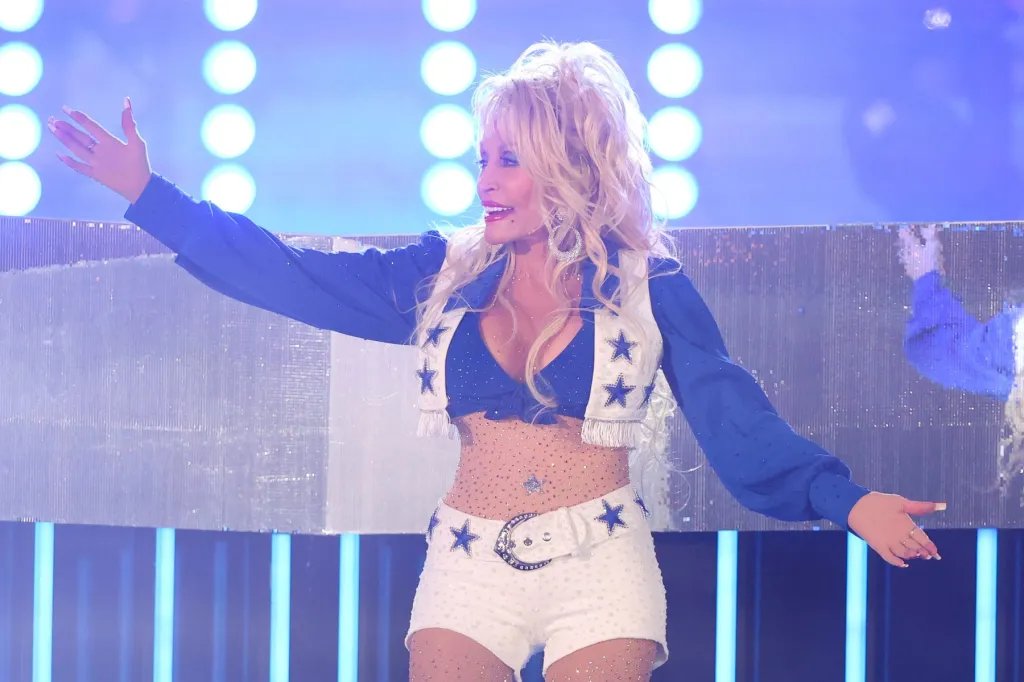

On the same day Dolly Parton died, a federal judge cited the legendary singer as he struck down a 2023 Texas law restricting drag shows — ruling the “sweeping” statute was so broad that even the late star might have faced criminal penalties for how she dressed.
In a decision on Tuesday (Aug. 26), Judge David Hittner ruled that the statute, known as Texas Senate Bill 12, was unconstitutional because it violated the First Amendment by infringing the freedom of speech.
The law is so vague that even “a single moment of eroticism could condemn an entire performance to criminal or civil penalties,” the judge said, before invoking Parton — who famously wore bright colors and low-necklines.
“Just as many people… chastised Dolly Parton as a voluptuous sex symbol because of her big hair, flamboyant clothes and breast exposure,” the judge wrote, “there are ‘erotic’ elements in countless popular performances that could be subject to both civil and criminal penalties under S.B. 12.”
Parton passed away earlier on Tuesday at the age of 80, sparking mass mourning for a legendary country singer and songwriter who spent half a century in the public eye. Hittner’s reference appears to be coincidental; it doesn’t reference her death and was likely written before the news was reported.
But it was just one of several mentions of Parton in the ruling. The drag performer who challenged the law sometimes performed as Parton on stage, the judge wrote. And he said the law, which banned performances that are “in some sense erotic,” is so broad that it could criminalize “a Dolly Parton impersonator who uses a breast plate while dancing and making gestures.”
The judge also cited other famous examples of musical artists who might have been subject to the Texas law, including Elvis and his “signature hip gyrations” and Miley Cyrus for “twerking on stage during a live performance at the 2013 MTV Video Music Awards.”
“These are just a handful of traditionally constitutionally protected performances that S.B. 12 would prohibit,” Judge Hittner wrote. “This court need not list additional hypotheticals to which S.B. 12 would apply because the potential applications are limitless.”
Enacted in 2023, S.B. 12 banned sexual gestures that use “accessories or prosthetics that exaggerate male or female sexual characteristics.” Violators can face up to a year in jail, and businesses hosting events can be fined $10,000 for each violation. An earlier version of the bill included explicit references to drag shows, but they were removed prior to passage in response to criticism.
The law was part of a slew of such statutes passed by Republican-controlled legislatures in 2022 and 2023. A similar law in Florida was struck down in court on similar free speech grounds, but one in Tennessee was allowed to go into effect after the Supreme Court refused to hear the case.
The judge, who previously issued an injunction refusing to allow the law to go into effect, concluded his ruling with a bit of plain-spoken advice: “For those who find such activities as described in this case offensive, the solution is relatively simple… just don’t go.”
The decision can and likely will be appealed to a federal appeals court and then if necessary to the U.S. Supreme Court. A spokesperson for the Texas attorney general’s office did not immediately return a request for comment.