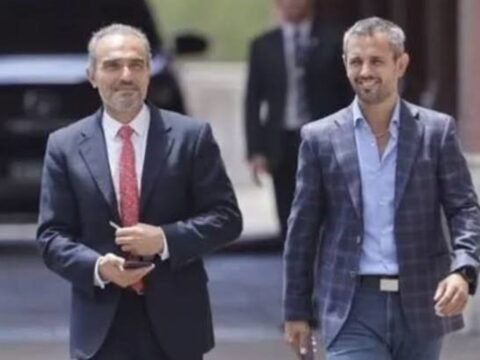



Prosecutors want a harsh prison sentence for an AI fraudster who stole more than $8 million in music royalties, telling a judge the man spent years ripping off “hard-working and often underpaid” artists and songwriters.
Michael Smith, 54, admitted in March to using AI to generate thousands of songs and streaming them billions of times with bots. But last week, he said he deserved no prison time, arguing the harm to any single artist was “insignificant” and “no victim suffered any real harm.”
In a response filing Tuesday (Sept. 29), the feds begged to differ. Urging the judge to sentence Smith to at least 46 months in prison, they say that for more than six years Smith “labored almost daily to perpetrate massive fraud” and did, in fact, directly harm working musicians.
“Smith was the architect of, and led, a sophisticated and multi-faceted fraud scheme over the course of many years to divert musical royalties from legitimate and hard-working songwriters and other rightsholders to himself,” prosecutors wrote. “A lenient sentence will send precisely the wrong message: streaming fraud will not result in meaningful punishment.”
The case against Smith represents the first U.S. criminal enforcement over streaming fraud, a longstanding problem that’s been made worse by AI tools that can churn out fake songs and then play them on repeat. Streaming royalties are divvied up from a finite pool of revenue, meaning fake streams siphon off money from real artists.
Smith was arrested in 2024 on a three-count indictment that charged him with using thousands of bots to continuously stream songs on Spotify, Apple Music and other platforms starting in 2017. In March, he entered a guilty plea on a single count of wire fraud conspiracy and agreed to forfeit more than $8 million in streaming fraud proceeds.
Wire fraud conspiracy carries a five-year maximum prison sentence, and federal guidelines call for between 46 and 57 months in Smith’s case. But federal probation officials recommended a lighter sentence of 24 months.
Last week, Smith’s lawyers pleaded with the judge to avoid sentencing him to prison altogether. They said he was “profoundly sorry” and has “accepted full responsibility” for his crimes, but they also said he had caused only “tiny, immeasurable losses” spread across millions of songwriters and artists.
“The effect each individual stream of one artist’s song has on every other artist’s share of total streams is not akin to a drop in a proverbial bucket — it is a drop in an ocean,” Smith’s lawyers wrote. “No individual artist or songwriter suffered any perceptible harm from Mr. Smith’s conduct.”
But in Tuesday’s filing, federal prosecutors say Smith’s scam has “all the hallmarks of the most serious white-collar crime,” and that he “stole from hard-working (and often underpaid) songwriters, artists, and other rightsholders.”
“Streaming fraud redirects a portion of the existing royalty pool from every single legitimate rightsholder to fraudsters,” the feds wrote. “Musical royalties that Smith fraudulently obtained came at the expense of the creators whose rightful royalties were siphoned away because every fraudulent stream perpetrated by Mr. Smith diluted the value of every legitimate stream.”